Information may be obtained or stored in your browser by cookies when you access the Website. This information is related to the user, the user settings or device. It is primarily used to ensure the site functions as expected by the user. We respect your right to privacy. Therefore, you can select to not allow some types of cookie. Please click on the different category headings to check the details and then change our default settings.
Strictly Necessary Cookies are cookies that are essential for this site to function properly. Strictly Necessary Cookies do not store information that can identify individuals. Strictly Necessary Cookies are used to view this site. Therefore, you cannot refuse the use of Strictly Necessary Cookies from these cookie settings. However, you can refuse the use of Strictly Necessary Cookies from the settings of your browser at any time. Please note that parts of the site may not function if you refuse the use of Strictly Necessary Cookies.
This site uses the following Strictly Necessary Cookies.
Cookie name: gdprCookieEn
Cookie name: optGA
Cookie name: optPardot
The Nippon Kayaku Group positions “people” as a vital capital resource. Human capital is not something that belongs to a company; it is the value that belongs to each and every employee. We are fully aware that drawing out that ability to the fullest extent possible and continually utilizing it is a key management responsibility. Thus, through strategic investment in human capital will we plot our course towards medium-to-long-term corporate value growth.
The human capital we perceive is one that not only pertains to individual employee specialization, skill and experience, but to the total capability of an organization born from the mutual actions of diverse human resources. Bolstered human capital therefore supports both sustainable revenue growth and capital efficiency improvements.
Our Long-term Management Plan Evolution2035 positions human capital management at the core of growth platform strategy. Starting with our talent portfolio, we will adopt a unified management strategy for recruiting, development, deployment and performance to deliver optimal postings. We will also quantitatively manage human capital KPIs in order to visualize results and verify their effects on profitability and capital efficiency.
FY2026 is underlined as our shift to implementation, with emphasis placed on initiatives in the four key areas of: securing and optimally employing growth-critical talent; strengthening training and careers initiatives; enhancing HR systems and rewards; and fostering the requisite organizational climate. We will place especial weight on advancing strategic deployment of digital, global and highly-specialized talent, and accelerating resource shifts to growth businesses.
We will also press on with better linking of evaluations, employee rewards and results, and the clarification of incentives for delivery of results. In tandem with providing greater transparency for responsibilities of managers and each organization, we will work on preparing an environment which allows diverse talent to output their abilities to the fullest. Such initiatives should aid our plans to improve employee engagement and talent retention.
Moving forward, we will look to increase transparency of human-capital-related disclosures and, based on international currents, deepen dialogue with all stakeholders, starting with our investors. We shall firmly tie the value created through individual and organizational progress to our business results and thereby realize improvements to sustainable corporate value.
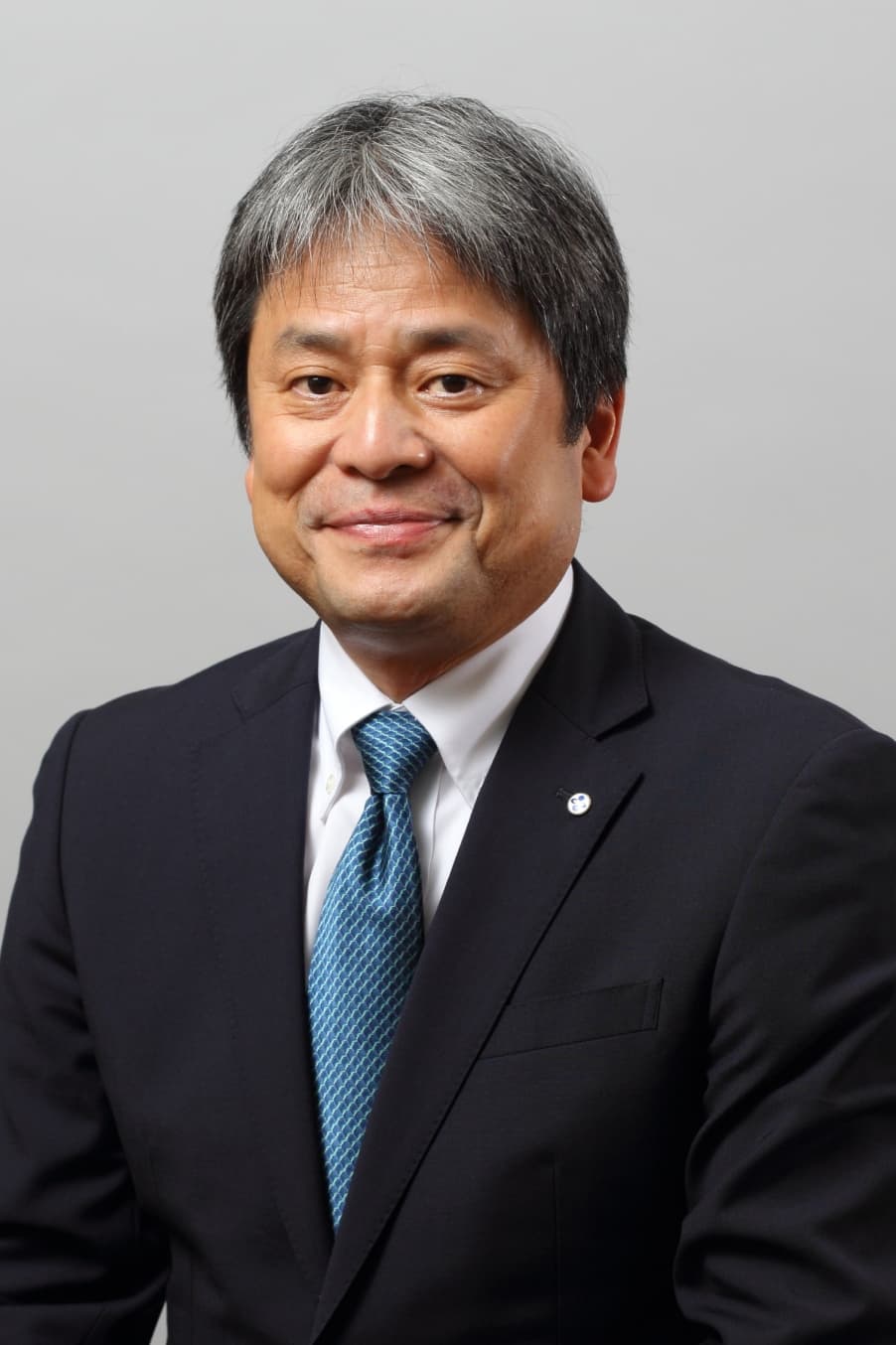
Makoto Takeda
Member of the Board
Managing Director

In the quest to realize its Long-term Management Plan Evolution2035, the Nippon Kayaku Group has positioned human capital management as one of its Growth Platform Strategies. We are therefore clarifying the types of talent necessary to realize our management strategy, seeking to increase corporate value through each of the recruitment, training, deployment and performance processes, and continuously managing progress with the aid of KPIs.
The business environment surrounding our Group demands the simultaneous realization of sales growth, business innovation, global development and improved productivity. And yet, against this backdrop have we seen shortages emerge in: growth-critical talent in the digital transformation and global fields; key replacement personnel at manufacturing sites (in addition to an ageing workforce); core management layers, and next-generation management candidates. We are also finding it hard to recruit workers straight out of high school.
To respond to these issues and achieve sustainable growth have we determined four key areas for human capital management: securing and optimally deploying growth-critical talent; strengthening training and careers initiatives; enhancing HR systems and rewards; and fostering the requisite organizational climate. Our integrated approach to these four areas is now a key initiative as we seek to construct a base from which both “those who choose” and “those who are chosen” can flourish together.
With a view to realizing its Long-term Management Plan Evolution2035 is our Group aiming towards:
A platform which helps draw out talent capability to the fullest is indispensable towards achieving the above, as we position human capital management at the core of Growth Platform Strategy.
For the following four key areas have we systematically organized our understanding of current situations, main initiatives and desired management impact.
| Key area | Current situation | Main initiatives | Expected Business Impact | |
|---|---|---|---|---|
| 1 | Securing and optimally deploying growth-critical talent | A lack of quantity, quality and deployment of growth-critical talent leading to imbalanced age composition, expertise, and diversity | ・Defining and visualizing key talent ・Identifying talent shortages and gaps by business area ・Strengthening experienced-hire and specialist recruitment ・Redesigning workforce composition with a view to digital transformation and productivity gains ・Preparation of succession plans for key positions ・Enhancement of talent management |
・Growth businesses to be advanced at greater speed ・Removal of business site bottlenecks ・Compatibility between sales growth and improved productivity |
| 2 | Strengthening training and careers initiatives | Insufficient skill development leading to conditions which struggle to achieve genuine feelings of growth and a stronger spirit of challenge | ・Preparation of a training system for each type of key talent ・Periodical training for next-generation manager candidates ・Promotion of digital and global human resource development as well as reskilling ・Enhancement of strategic human resource deployment and rotation ・Upgrading of development support through career interviews |
・Systematic development of required talent ・Strengthening of the management pipeline ・Improved employee sense of development and challenging spirit |
| 3 | Enhancing HR systems and rewards | Issues include insufficient linkage of evaluations and employee treatment being insufficiently linked, and the lack of transparency in evaluation standards | ・Shifting towards an HR system based on roles and expertise ・Expansion of rewards and career opportunities for specialist talent ・Reassessment of the managerial appointments system ・Standardization and upgrades to the operation of evaluations |
・Attraction and retention of excellent talent ・Fostering a climate in which results and challenges undertaken are appropriately evaluated ・Strengthening incentives for productivity improvements |
| 4 | Fostering the requisite organizational climate | Insufficient inter-departmental links are leading to trends of risk aversion taking priority over new challenges | ・Strengthening risk management ・Revitalization of dialogue through expansion of town hall-style meetings and 1-on-1s. ・Introduction of 360 evaluations ・Redesigning of anti-harassment policies ・Advancement of a system and policies that promote success from diverse talent |
・Promotion of crosscutting interdepartmental links ・Promotion of taking on challenges ・Improved engagement ・Reduced employee turnover rate |
By providing a comfortable working environment conducive to employee health are we aiming to improve both productivity and employee satisfaction levels. We are placing real importance on upping employee engagement through creating a workplace climate in which employees can empathize with the KAYAKU spirit, enter relationships of mutual trust with management, and go about rewarding work with real vitality.
Our talent system has seen us introduce the concept of “Position Class,” which seeks to remove age, gender, career, academic record, and nationality considerations from the job allocation process. For managerial appointments, meanwhile, we have introduced a system which allows employees to voluntarily stake a claim for such positions, with criteria assigned to the relevant roles and responsibilities.
Our HR Development system also seeks to support employees with a get-up-and-go spirit towards learning and self-improvement, thereby promoting autonomous development and helping individuals pursue myriad career paths which align with their various wishes.
Discussions, status report summaries and evaluations on human capital management are conducted by the Group’s Sustainable Management Committee, chaired by the President. The results of such meetings are reported to the Board of Directors, who fulfil the monitoring and supervisory roles within our HR Development System.
The Sustainability Management Meeting, chaired by our President, is where the Nippon Kayaku Group discusses its human-capital-related approach, priority initiatives, KPIs and status updates, in addition to integration and evaluation of activity status. The contents of these discussions are reported to, and supervised by, the Board of Directors.
| Indicator | Scope | FY2028 Target |
FY2035 Target |
Link to Strategy |
|---|---|---|---|---|
| Next-Generation Leadership Talent | Non-consolidated | 120 | 130 | With an eye on business expansion, generational transition and securing management continuity, we will systematically expand our succession pipeline to reduce key position succession risks and improve decision-making quality |
| Digital Talent | Non-consolidated | 240 (10%) |
480 (20%) |
Through companywide promotion of digital integration and reform of core systems, we will support our productivity gains by developing a digital talent base bridging frontline operations and management, thereby strengthening our competitive position |
| Finance and Strategy Professionals | Non-consolidated | 59 | 64 | We will strengthen the finance and strategy talent to aid more sophisticated business portfolio management and capital efficiency, and strive for increased accuracy in strategic investment decisions and maximization of corporate value |
| Global Talent | Non-consolidated | 360 (15%) |
480 (20%) |
In order to expand overseas business and strengthen governance, we shall expand our base of globally-capable talent and enhance global management capabilities |
| Education Investment per Employee | Non-consolidated | JPY 100,000 | JPY 200,000 | We shall move forward with selective investments in priority areas and companywide reskilling, thereby driving human capital quality improvements in the drive for sustainable added-value creation |
| Training Completion Rate for Successor Candidates to Next-Generation Management Positions | Non-consolidated | 100% | 100% | With a view to guaranteeing stability of the management pipeline, we will be thorough in our efforts to provide systematic training opportunities to the candidate class as we seek to raise both organizational operating capacity and implementation ability |
| Indicator | Scope | FY2028 Target |
FY2035 Target |
Link to Strategy |
|---|---|---|---|---|
| Number of Labor Law Violations | Consolidated | 0 | 0 | On a platform of rigorous compliance, we will not only minimize corporate risks but construct a highly-dependable management foundation |
| Average Monthly Overtime Hours | Consolidated | 10 hours or less | 10 hours or less | Finding compatibility between improved productivity and employee wellbeing, we will seek to raise medium-to-long-term performance through building a sustainable work environment |
| Number of Employees Working More Than 45 Hours of Overtime per Month | Consolidated | 0 | 0 | We will be thorough in reducing lengthy overtime as we seek to lower human capital risks and stabilize organizational performance |
| Awareness Rate of the Consultation Hotline | Consolidated | 100% | 100% | We will improve the effectiveness of our reporting channels with the aim of facilitating early risk detection and psychological safety, and fostering the relevant robust organizational climate |
| Indicator | Scope | FY2028 Target |
FY2035 Target |
Link to Strategy |
|---|---|---|---|---|
| Ratio of Female Directors | Non-consolidated | 20% or higher | 30% or higher | Through the inclusion of diverse perspectives and insights into our management practices, we will improve both decision-making quality and the effectiveness of corporate governance |
| Ratio of Female Managers | Non-consolidated | 10% or higher | 30% or higher | With a view to optimizing our medium-to-long-term talent portfolio, we will accelerate training and advancement for female talent, and bolster organizational capability with regard to decision-making and innovation |
| Employment Rate of Persons with Disabilities | Non-consolidated | 2.7% or higher | 3.0% or higher | We will seek to embed and advance the roles of people with disabilities beyond statutory employment requirements, and create an inclusive workplace in which diverse talent actively participates in value creation |
| Number of Foreign National Employees | Non-consolidated | 68 | 107 | Support business globalization, and enhance organizational flexibility and market responsiveness through a more diverse workforce |
Nippon Kayaku’s talent assessment system is chiefly based on a performance assessment. This assessment, which covers every employee, begins with the assignment of work commensurate with each person’s role and responsibility at the start of every financial year. While implementing their tasks, each employee will determine their annual work targets in meetings with their superior, and work towards those targets over the course of the financial year. The employee will then confirm progress with their superior at a Mid-term Results and Target Achievement Status Meeting held once every six months. Finally, with the coming of the new financial year, both employee and superior will review and assess the previous year’s performance, and set targets for the year ahead. The results of these reviews will be reflected in employee bonuses.
In addition to a performance assessment, the talent evaluation system for non-managers is comprised of two further parts: a challenge assessment and a process assessment. The former assesses the targets the employee has voluntarily set, while the latter assesses the process by which they achieve those targets.
Our overall aim is to increase employee work-motivation and engagement through assessing not only targets and degrees of achievement but the processes for getting there, thus linking company growth to the personal growth of the employee, and aligning the former with the self-actualization of the latter.
So that we may flexibly respond to the dramatic changes in the business management environment, and with the aim of finding the right people for the right jobs by matching those with the proactive willingness and ability to perform with the workplaces most in demand of them, we have opened up our recruitment process to external applications. FY2024 saw us conduct open recruitment processes for two posts, both of which successfully resulted in job transfers. By offering challenging opportunities to the employees who desire them, we thereby promote career autonomy, support employee career progression, and connect that to improved work engagement.
With products being increasingly difficult to differentiate these days, the “people” who provide products and services are becoming a major element of business competitive advantage. Therefore, he extent to which we can utilize our talent has become a major Nippon Kayaku theme too, giving rise to our belief that more rewarding work and greater purpose in life for each individual employee will feed into yet greater corporate value.
FY2025 saw 2,233 employees (including full-time, junior, part-time and senior partners) take part in our 3rd Employee Engagement Survey. Nippon Kayaku’s overall score was 49.7, an improvement of 1.3 points upon the previous financial year. Through this, we were able to recognize that improvements have stemmed from the action plan fixed and implemented in response to issues emanating from analysis of each business site’s structural conditions. From a companywide perspective, while “manager support” and “workplace unity” scored highly just as last year, “appropriate recruitment and deployment” and “growth and future prospects for business” exhibited low-scoring trends. From this, we glean that we have not yet fully become the kind of strong organization than can conquer market competition, and that room for improvement exists regarding organizational climate and systems. We are therefore fixing action plans for every business site and conducting related improvement activities in our quest to improve engagement. We shall continue moving forward with dialogue and improvement activities based on the latest survey results, and driving reforms which allow every employee to work with real vitality, as we seek to foster a comfortable and rewarding organizational climate.
| Indicators | Scope | Unit | 2021 | 2022 | 2023 | 2024 | 2025 | FY2025 Target |
|---|---|---|---|---|---|---|---|---|
| Response rate | non-consolidated | % | - | - | 85.9 | 83.9 | 86.2 | - |
| Employee engagement | non-consolidated | score | - | - | 47.1 | 48.4 | 49.7 | 50 |
Areas of strength: Manager support activities, workplace teamwork
Areas with issues: Appropriate recruitment and placement; Prospects for business growth and business future
Our initiative for FY2025 consisted of drawing up and implementing an Action Plan for each department based on survey results and structural analysis. As a consequence, we were able to observe examples of significant improvement in departments for which survey scores were low in FY2024. We will henceforth persevere with such improvement-focused initiatives as we strive to visualize the employee engagement situation and increase organizational capability under the overarching aims of preparing a more comfortable and rewarding workplace and maximizing outcomes within.
Nippon Kayaku is working on optimizing working hours and reducing instances of long working hours. Specifically, we have set up a Working Hours Management Advisory Committee, comprised of both management and labor representatives, which demands and reviews twice-yearly reports from each business site on working hours management surveys, related measures and initiatives.
We also provide training for supervisors, managers and talent managers, and set up study group sessions cosponsored by both the management and labor sides.
While respecting laws related to working hours and Article 36 Agreements (which stipulate overtime limits agreed upon by the company and labor unions), we have fixed a policy of “no more than 45 overtime hours per month in principle, and an upper limit of 80 overtime hours per month.”
We are even going beyond the mere observation of laws with various initiatives including management of workplace entry and exit, objective register management, and appropriate management of overtime for supervisors and managers.
| Indicators | Scope | Unit | 2021 | 2022 | 2023 | 2024 | 2025 |
|---|---|---|---|---|---|---|---|
| Average number of annual hours worked per worker | consolidated | hours | - | - | - | 1,916 | 1,893 |
| Average monthly overtime hours | consolidated | hours | - | - | - | 10.7 | 16.14 |
| Average number of annual hours worked per worker | non-consolidated | hours | 1,911 | 1,896 | 1,876 | 1,883 | 1,899 |
| Average monthly overtime hours | non-consolidated | hours | 12.7 | 11.9 | 11.2 | 11.8 | 12 |
The Nippon Kayaku Group’s Human Rights Policy expresses zero toleration of discrimination based on differences in gender, age, nationality, race, religion, disability, place of origin, ancestry, creed, political views, sexual orientation, marital status, employment status, or other characteristics. Our Personnel Wage System is also based on a remuneration structure unified across genders. Furthermore, when it comes to minimum wage and overtime pay, we respect laws on equal work for equal pay, and pay above the minimum.
We currently operate a Position Class System which bases remuneration around duties and roles, and thereby comprises a structure which does not of itself give rise to gender-based wage differentials. However, in practice, discrepancies do currently occur between average male and female wages due to the effects of different composition ratios within senior and management classes. Against this backdrop do we also recognize the effects of differences in occupation structures based on previous recruitment practices, and the impact of life events in the career-building process. We are therefore seeking to eradicate these structural wage differentials by readying a workplace that allows diverse talent to output their abilities to the fullest, improving management-class diversity and support for career-building, and promoting flexible working.
| Indicators | Scope | Unit | 2021 | 2022 | 2023 | 2024 | 2025 | |
|---|---|---|---|---|---|---|---|---|
| Average annual pay | Male | non-consolidated | JPY thousand | 7,683 | 8,003 | 7,704 | 7,979 | 8,207 |
| Female | non-consolidated | JPY thousand | 6,366 | 6,707 | 6,336 | 6,632 | 6,734 | |
| Overall | non-consolidated | JPY thousand | 7,477 | 7,801 | 7,488 | 7,763 | 7,964 | |
| Gender wage differentials | Full-time workers | non-consolidated | % | - | 75.6 | 82.2 | 83.1 | 82.1 |
| Part-time & fixed-term workers | non-consolidated | % | - | 53 | 70.9 | 71.2 | 74 | |
| All workers | non-consolidated | % | - | 72.3 | 71.4 | 72.5 | 71.8 | |
Since renewing our labor agreement in 1998, Nippon Kayaku Co. Ltd, and the Nippon Kayaku Labor Union have maintained healthy relations based on mutual labor-management trust. Under the Union Shop System, with the exception of managers and a section of contracted workers, union membership rates stand at 100%.
With respect to the union, the company endeavors to disclose as much information as possible, earnestly respond to matters in line with its negotiation policy and have management directly convey its policies on business management, safety and health by convening the Central Joint Labor Management Council three times a year. We also hold a Central Management Round-table Conference once a month, sharing information pertaining to the company’s situation, deepening mutual understanding of issues, and discussing ways of resolving issues. We also make efforts to promptly convey the details and results of such meetings to employees.
Issues concerning individual business units are discussed at each unit’s annual Joint Labor Council and monthly Management Round-table Conference. Through the shared awareness of issues, relevant discussion and opinion exchanges allowed by these meetings are we aiming to deliver a more comfortable workplace.
| Meeting Name | Contents | No. of Meetings held in FY2025 | Attendee |
|---|---|---|---|
| Central Joint-Labor Management Council | Company executives explained to their union counterparts about company management approach, financial results, business strategy, and matters pertaining to the environment, safety and health, and discussions were held on resolving issues | 3 | From the company: Executives, managers from relevant departments, HR Division From the labor union: Head Office executives, all branch managers |
| Business Site Joint-Labor Management Council | The company provided explanations to the labor union on business site policies and business planning, and discussions were held on how to resolve issues | 1 | From the company: Business site managers (plant managers and administrators, production managers, technical managers etc.) From the labor Union: Branch executive committee members |
| Central Management Round-table Conference | The company side explained to union executives about matters pertaining to company business plans, new businesses, the management situation (covering manufacturing, sales and R&D), manufacturing technology improvements, and personnel plans. | 12 | From the company: The Executive Officer in charge of HR, members of the HR Division From the labor union: Head Office executives |
| Business Site Managers' Round-table Conference | The company provided explanations to labor union executives on matters related to business sites' business plans; new businesses; management situations; production, sales and research situations; improvements to production technology; and talent planning. | 12 | From the company: Business site managers (plant managers and administrators, production managers, technical managers etc.) From the labor union: Branch executive committee members |
| Specialist Committee on Working Style | Opinions were exchanged on matters related to management of working hours; next-generation development support; promotion of women's roles; employment of older workers; the welfare and benefits system; the various leave systems; the talent system; human resource training; and childcare and the nursing of relatives, and discussions were held on how to resolve issues. | 5 | 2 company members, 3 labor union members |
| Indicators | Scope | Unit | 2021 | 2022 | 2023 | 2024 | 2025 |
|---|---|---|---|---|---|---|---|
| Number of union members*1 | consolidated | persons | - | - | - | 3,532 | 3,447 |
| Union membership rate*2 | consolidated | % | - | - | - | 72 | 74 |
| Number of union members*1 | non-consolidated*3 | persons | 1,695 | 1,687 | 1,697 | 1,697 | 1,746 |
| Union membership rate*2 | non-consolidated*3 | % | 100 | 100 | 100 | 100 | 100 |
At Nippon Kayaku, it is compulsory for all new hires to undergo training in working condition matters related to wages, bonuses, working hours, occupational safety and health, welfare and benefit programs, and regulations. These standards are also published on the company portal site, where employees may check them at any time.
Our Talent Management Meeting also convenes periodically, equipping the talent managers of each business site with information to share with and educate employees. Such initiatives help us advance the thorough instillation of labor standards throughout the workforce.
With the aims of either forestalling, or fairly and promptly resolving, workplace harassment situations, we are now setting up a Board of Grievances. The Board comprises equal numbers of company and union representatives, and operates around a system which guarantees impartiality and transparency. Instances of employees bringing harassment-related complaints see the Board conduct confirmation hearings and investigate related parties, explore and implement remedial measures, and fix anti-recurrence measures. The Board will also bring in members from related business sites when situations demand as it prepares the framework to deliver appropriate and effective judgments. It also engages in maintaining and improving the overall anti-harassment system through complaint response management, improvement measure follow-ups, and continual workplace environment checks. Overall, it seeks to create a workplace in which employees can work safely and effectively through publicizing its consultation service, distributing guidebooks, and delivering management training. For example, in order to promote the forestalling of harassment situations and a workplace with higher levels of psychological safety, FY2025 saw us deliver Respect Training to 50 management members of our Safety Systems Division, and 21 management members at our Kashima Factory.
FY2025 gave rise to two violations of the Labor Standards Act, concerning the exceeding of limits for monthly overtime (80 hours) and special provisions (6 times). In both cases, the labor union and Human Resources Department promptly conducted hearings with senior members of the organization concerned to confirm the reasons for the violation and anti-recurrence measures. The Human Resources Department also delivered working hours management training to the workplaces concerned. We view with the utmost seriousness the occurrence of the same violation for two years running and have consequently implemented emergency inspections for working hours management. We also plan to further strengthen our training programs related to working hours management.
| Indicators | Scope | Unit | 2021 | 2022 | 2023 | 2024 | 2025 |
|---|---|---|---|---|---|---|---|
| Number of labor standard violations | consolidated | cases | - | 1 | 0 | 1 | 2 |
| Number of labor standard violations | non-consolidated | cases | - | 1 | 0 | 1 | 2 |
Nippon Kayaku has introduced the following Welfare and Benefits System to support the lives of its employees.
| Welfare and Benefits Systems | Details |
|---|---|
| Social Insurance | Health Insurance, Employee Pension, Nursing Care Insurance, Employment Insurance, Industrial Accident Compensation Insurance |
| Asset Formation | Nest-egg savings, Employee stock ownership, Restricted Stock Transfer Incentive System |
| Human Resource Development | Study Abroad Program |
| Self-development | Providing assistance for acquiring qualifications |
| Pension | Defined-Benefit Corporate Pension System |
| Accommodation | Dormitories, Leased company housing |
| Childcare and Nursing | Leave System; Providing assistance with childcare items and nursing-related expenses |
| Other | Cafeteria Plan |