Effective Use of Resources

Policy and Basic Approach

With its aim of contributing towards a sustainable society through efficient use of limited resources, the Nippon Kayaku Group conducts initiatives mindful of global sustainability across the entire product lifecycle, from the R&D and manufacturing phases to sales and recycling. In addition, waste amounts, recycling rates and zero-emission rates have been fixed as key targets of our Sustainability Action Plan as we move ahead with advances in both waste reduction and efficient resource use.

System

Audit

In order to confirm whether wastewater and waste are being appropriately managed at every business site and Group company, the Nippon Kayaku Group conducts audits in the form of Core Environment, Safety and Health Diagnostic Checks. These Checks allow us to confirm any problems or inadequacies regarding compliance with laws and regulations on wastewater and waste treatment, run our eye over wastewater treatment areas and waste disposal areas, and grasp any problems with the management situation.

Targets and Results

Scroll sideways for an overview of the table below.
Indicator FY2028 Target FY2035 Target Scope
Recycling Rate 82% or higher 85% or higher Non-consolidated
Zero-emissions Rate 0.8% or less 0.6% or less Non-consolidated
Waste generation
*Compared to FY2024
1% per-unit reduction 3% per-unit reduction Consolidated
Trends in Waste Generation Amounts and Zero-emission Rates (non-consolidated)

Initiatives

Waste reduction

In order to advance efficient resource use are we engaged in initiatives to hold down waste production at every business site. Through treating generated waste thoroughly and appropriately under our waste management system based on internal regulations, upgrades to waste sorting, and promotion of recycling, are we pressing ahead with resource circulation.

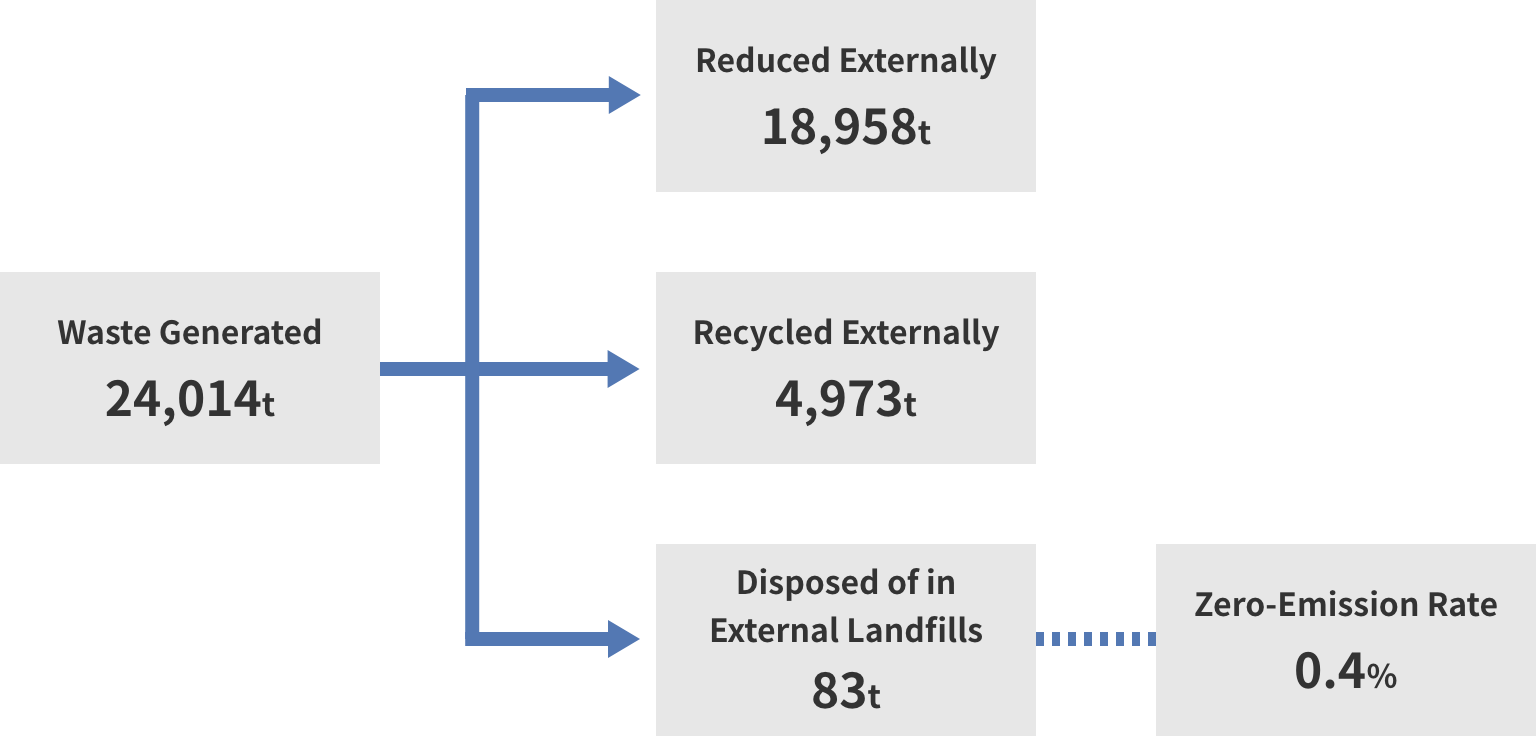
FY2025 Waste Generation and Treatment Flow (Japan)

Responding to the Law on Plastic Resource Recycling

Amid the ever-changing, ever-stricter environment around plastics did Japan introduce a Law related to the Promotion of Recycling of Plastic-related Materials (Law on Plastic Resource Recycling) in April 2022. Under this Law, Nippon Kayaku can be defined as a “heavy waste producer”. Hence, in order to contribute to a sustainable society, we are mindful of the 3Rs (Reduce, Reuse and Recycle) as we drive forward efforts to systematically fix plastic waste targets and reduce the volumes produced.

Plastic Waste Emission Amounts
Scroll horizontally to view more.
Indicators Scope Unit 2021 2022 2023 2024 2025
Plastic waste emissions Non-Consolidated tons 888 885 788 780 770
Group companies tons 277 326 326 294 319
Total tons 1,593 1,602 1,375 1,074 1,019
Recycling rate Non-Consolidated % 80.8 81.8 91 95 98

Business Unit Initiatives

Mobility & Imaging Business Unit
Industrial Waste Management

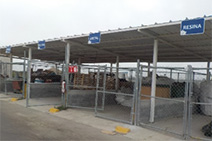
Kayaku Safety Systems de Mexico (KSM) properly sorts its solid waste into wood, cardboard, nonferrous metals, aluminums and plastics, and is constantly on the lookout for external suppliers who can reuse these materials. The materials are stored in a fixed place for 2 to 3 months before being collected by government-certified suppliers.
The recyclable elements of industrial waste are delivered to various recycling companies so that wood being can be repurposed for wooden pallets, cardboard is also reused, and new materials can be generated from plastic, aluminum and steel.
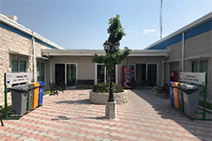
The end of 2021 brought waste management improvements. Prior to that, we had no proper sorting system, meaning that waste was sent for treatment while containing resources that could yet be effectively used. We have now rectified that by fixing reuse and waste standards for each type of waste, and sorting in line with those standards. This has made sorting decisions easier for workers, thereby increasing efficiency, accuracy, and recyclable amounts of metals, wood and plastic. We have also boosted reusable materials by reassessing plastics formerly designated as waste. Our higher recycling amounts have also produced the secondary benefits of less municipal waste and landfill disposal. Waste sorting not only takes place on the shop floor, but also in such areas as the employee break room, where general waste is sorted.

Industrial Waste Management
Recycling amounts
Scroll horizontally to view more.
Category Scope Unit 2021 2022 2023 2024 2025
Metals KSM tons 1 3 9 9.7 24.7
Plastics KSM tons 50 73 77 48.1 60.8
Lumber KSM tons 10 4 9 10.5 31
Cardboard KSM tons 24 23.3 26 36.5 36.4
Municipal waste KSM tons 160 165 112 114.4 97.9
Packing material Trays KSM pieces - - - 5,975 26,970
Polystyrene KSM tons - - - 0.3 1.3
Saving KSM JPY 10,000 - - - 86.5 390.6
Fine Chemicals Business Unit
Pursuing Zero Emissions through Effective Use of Waste

In addition to cutting volumes of waste produced, Nippon Kayaku promotes exploring the reuse of waste as a future resource. Of the many types of waste generated by the Fukuyama Plant, sludge produced during microbial water treatment comes in particularly large amounts. As the moisture component of sludge makes it difficult to treat, we formerly sent it to landfill after the proper management processes. As a result of our exploration of using this sludge as a resource that could help decrease environmental burdens, it is now being effectively used by one incineration firm as a heat-adjustable fuel (or so-called “reduced fuel”) and by another incineration firm which converts incinerated ash into materials for cement or roadbeds. The Fukuyama Plant is also looking at ways of utilizing other forms of industrial waste, and continues to achieve rates of 0% landfill and 100% recycling.
Going forward, the plant will strive to keep the proportion of industrial waste sent to landfill (the Zero-emissions Rate) at 1% or lower, and maintain recycling rates of 99% or above.

Life Science Business Unit
Pharmaceutical Product Initiatives

Our environmentally-friendly packaging initiatives see us respect domestic and overseas legislation and regulations related to the environment, envisage the risks associated with product development, manufacturing processes and business activities, and advance efforts to reduce environmental burdens, prevent pollution, save energy, mitigate climate change, conserve resources, and reduce waste.
Our pharmaceutical packaging has been certified by the Forest Stewardship Council (FSC) and has acquired an FSC license. We are sequentially switching over our pharmaceuticals packaging boxes, patient brochures and shipping boxes to FSC certified paper, as well as widening the use of eco-friendly (non-VOC) inks. As of May 2026, of our 64 products with 117 items, 36 products with 63 items (56%) of packaging material and 51 of 117 leaflet materials (44%) have been switched over to environmentally-friendlier alternatives. Furthermore, a new initiative, so far rolled out to 11 of 23 product items, has seen us promote a switchover from cup-shaped to pedestal-shaped protective wrapping. We shall henceforth continue with efforts to reduce both plastic use and CO2 emissions.

Related Data

PageTop
Our Business
R&D
Corporate Information
Global Network
Investor Relations
Integrated report
Sustainability