Climate Change

Policy and Basic Approach

Recent years have witnessed the emergence of abnormal climates across the world alongside environmental damage, causing a heightened sense of crises with regard to climate change. The 27th Conference of the Parties to the United Nations Framework Convention on Climate Change (COP27) presented the chance to further accelerate international decarbonization efforts. As one strand of its Green Growth Strategy based on The Paris Agreement, the Japanese government has declared its intent to reach carbon neutrality by the year 2050. In endorsing this policy movement has the Nippon Kayaku Group also set its own ultimate target of becoming carbon neutral by 2050, with its intermediate FY2030 Medium-Term Environmental Targets, initially fixed in 2020, now revised from the 2℃ to the 1.5℃ global warming target. For its own response to climate change, our Group plans significant reductions in GHG emissions via thorough promotion of energy saving, manufacturing process optimization, the introduction of low-emission solar-powered generators, and switchovers to renewable-energy-sourced low-emission-factor electric power. We will also contribute to decarbonization across our value chain through providing products aiding the realization of a decarbonized society and strengthened supplier engagement.

Information Disclosure based on TCFD Proposals

Governance

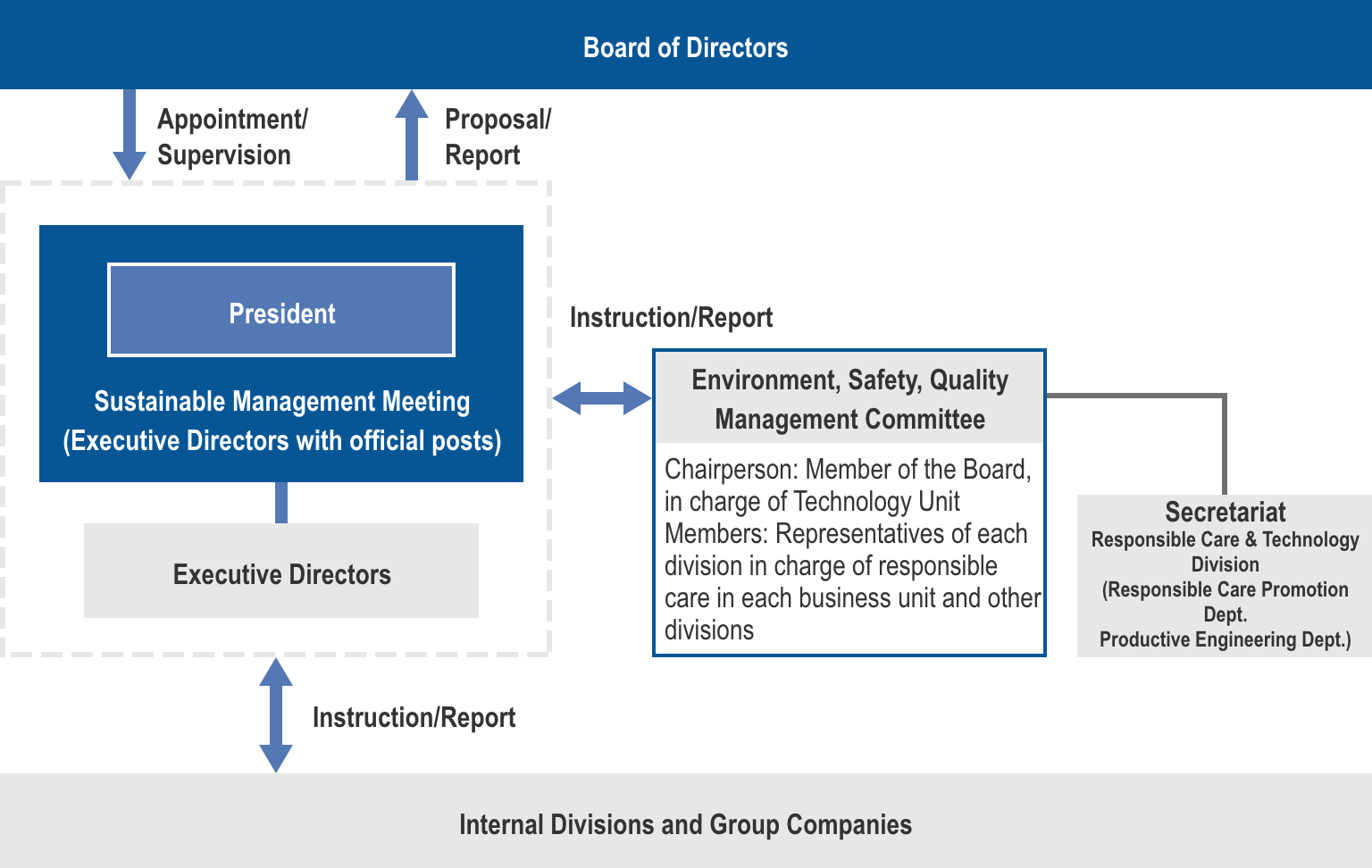
The Sustainable Management Meeting, chaired by our President, is tasked with discussing Nippon Kayaku Group business plans which incorporate future climate change responses, and summarizing and evaluating the status of environmental activities. Discussion, summary and evaluation results are reported to the Board of Directors, which assumes the supervisory and directorial role in this system.
We have also organized an Environment, Safety and Quality Management Committee to serve as an advisory body to the Sustainable Management Meeting. Its remit is to take a crosscutting organizational approach towards coordinating the advancement of our climate change measures and to hold yet deeper discussions on climate change issues.

Governance

Strategies

The Nippon Kayaku Group is developing several businesses on a global scale, with each field entailing various risks and opportunities. In order to grasp the effect brought by climate change upon each business, we have, in line with TCFD recommendations, evaluated the climate-related risks across our entire group and identified opportunities in each business field. For each evaluation have we referred to multiple scenarios, analyzing both the transition risks and physical risks. Furthermore, our Long-term Management Plan Evolution2035 divides the periods in which risks might emerge into short-, medium- and long-term, thereby organizing the various impacts along a time axis. Based on the results of this analysis shall our Group strive to reduce risks and create opportunities through improving energy efficiency, expanding use of renewable energy, strengthening our supply chain, and developing both products and technologies contributing to decarbonization.

Period Reason for adoption
Short-term The 3-year period spanning FY2026 to FY2028 Phase 1 of the Long-term Management Plan: Evolution2035
Medium-term Up to FY2035 Aligned with the final year of the Long-term Management Plan: Evolution2035
Long-term Up to FY2050 To align with Japan’s NDC (Nationally Determined Contribution) Target Year

Climate-related Risks

Our 1.5℃ and 4℃ warming scenarios for climate-related business risks are based on the IPCC’s Representative Concentration Pathways (RCP Scenarios 2.6 and 8.5), as well as the IEA’s Sustainable Development Scenario (SDS) and Stated Policies Scenario (STEPS).

The risks of switching to a decarbonized economy in a 1.5℃ target scenario

Scroll horizontally to view more.
Category Principal risks Risks
appearing
Financial impact Principal measures adopted
Policies and legal regulations Rise in operating costs due to tougher emissions regulations Short to long-term Moderate
  • Introduction of decentralized power sources at each business site, such as solar power generation and high-efficiency co-generation
  • Thorough energy-saving activities and material loss reduction through use of MFCA
Price hikes for electricity and LNG Short to long-term Moderate
Rises in raw material prices due to tougher emissions regulations Short to long-term Large
  • Engaging with suppliers to promote reductions in their emissions
Market and rumored developments Increased costs due to environmental information disclosure requirements and LCA calculations etc. Medium to long-term Small
  • Rationalizing calculation methods and introducing LCA calculations for industrial waste produced by each business site

Physical impact risks of a 4℃ target scenario

Scroll horizontally to view more.
Category Principal risks Risks
appearing
Financial impact Principal measures adopted
Acute and chronic physical risks Cost increases from flood damage associated with typhoons, heavy rainfall and high tides Short to long-term Moderate
  • Based on the results of flood simulations, quantify financial impact and implement flood countermeasures
Water-shortage impacts on business operations Medium to long-term Small
  • Strengthening water-saving measures in the production process, and exploring ways to reuse and recycle water
Reduced productivity due to rising temperatures Medium to long-term Small
  • Working condition improvements such as stronger air conditioning; promoting automation of high-temperature processes

Opportunities for each business field if moving towards a decarbonized economy in a 1.5℃ target scenario

Scroll horizontally to view more.
Business field Business environment Opportunity Opportunities
appearing
Financial
impact*
Safety Systems Tougher regulations for GHG emissions in every country and region
  • Increased demand for yet further energy-saving properties in electrical goods
  • Sales of automotives with internal-combustion engines to be heavily restricted depending on the region
  • Advancements in moves towards smaller and lighter automotive safety components with more diversified shapes, in response to more electric vehicles and automobile transformations
  • Expansion of safety components for unmanned aerial vehicles such as drones
Short to long-term Large
Polatechno
  • Expanded use of safety display device components, such as sensors and HUDs, in response to more electric vehicles and automobile transformations
  • Expanded use of polarizing plates which help reduce power consumption of display devices
Short to long-term Moderate
Functional Materials
  • Advancement of social changes such as moves to towards smart cities
  • Increased demand for yet further energy-saving properties in electrical goods
  • Increased demand for storage batteries that can handle large output variations geared towards the ever-expanding field of renewable energy
  • Expanded global demand for relatively low-emission movement and delivery processes
  • Expansion of semiconductor-related goods amid moves towards smart cities and digital transformation
  • Expanded use of functional materials which help reduce power consumption of display devices
  • Expanded use of low-emission materials and advancement of the switchover to biomass materials
  • Expanded use of resin materials to help achieve lighter mobility bodies for vehicles
Short to long-term Large
Color Materials
  • Expanded use of ink for digital-on-demand printing which renders low-carbon printing possible
  • Expanded use of dyes for dimming glass and film used to control incoming light-rays
Short to long-term Large
Catalysts
  • Expanded use of catalysts in the production of green energies such as hydrogen
  • Expanded use of catalysts for the promotion of biomass materials
Medium to long-term Large
Pharmaceuticals
  • Limited direct impacts
  • Reducing GHG emissions by reviewing packaging formats
Short to long-term Small
Agrochemicals
  • Expanded use of biostimulants to maintain and improve agricultural productivity amid the rising temperatures expected even if the 2℃ target is met.
  • Application of existing pesticides to newly problematic pests
Medium to long-term Small
  • *Financial impact: Large (2 billion yen or more), Moderate (0.5 to 2 billion yen), Small (0 to 0.5 billion yen)

Risk Management

Our Group has positioned Climate Change Response as one of its Key Sustainability Issues. Under the Governance System constructed by the Board of Directors, Sustainable Management Meeting and the Environment, Safety, Quality Management Committee, we are identifying, evaluating and managing climate change risks, chiefly through the Responsible Care and Technology Division. Identified risks will trigger the fixing and implementation of response measures as we plan not only to reduce risks but deliver continuous improvements through monitoring of response situations.

Metrics and Targets

Scroll sideways for an overview of the table below.
Indicator FY2028 Target FY2035 Target Scope
GHG emission amounts (Scope1+2)
*Compared to FY2019
36% reduction 64% reduction Consolidated

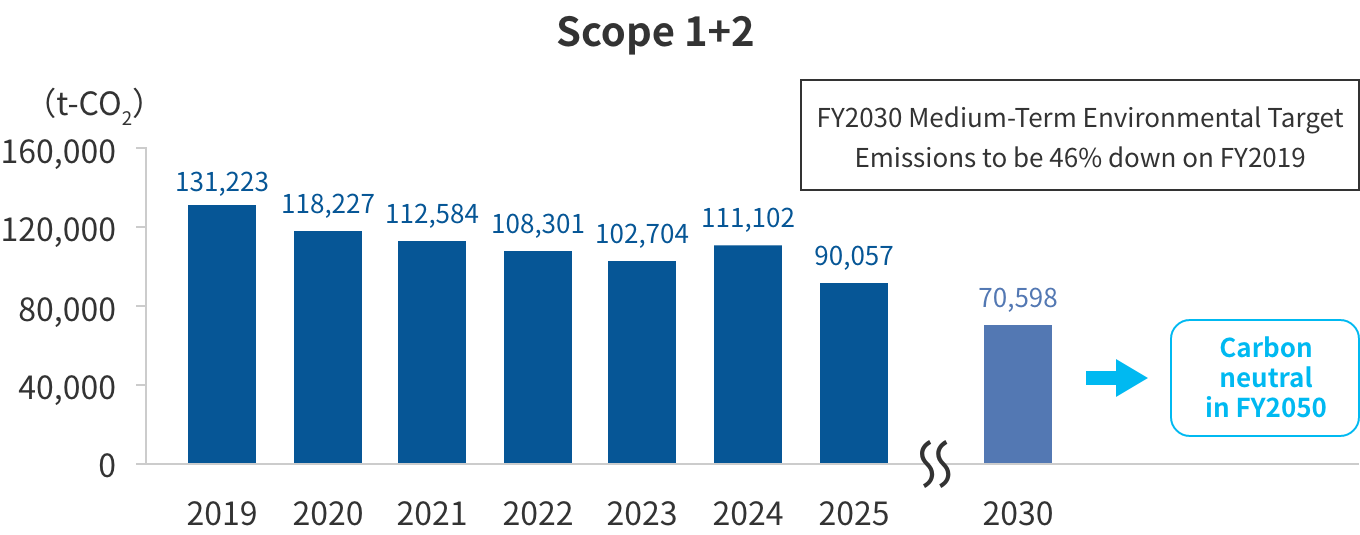
The Paris Agreement adopted at COP21 in 2015 contains the international target of limiting the rise in average global temperature to under 2℃, and making further steps to hold it down to 1.5℃, above pre-industrial levels. Taking that onboard, the Nippon Kayaku Group reassessed its Medium-term Environmental Targets in April 2024, raising them from the 2℃ to the 1.5℃ global warming target. Specifically, we are targeting for FY2030 Scope 1 and Scope 2 emissions to be at least 46% lower than those of FY2019. This therefore sees us aiming for 4.2% annual emission reductions on FY2019 levels from FY2025 onwards. Furthermore, with a view to achieving carbon neutrality by 2050, we have been working on emission reductions across our entire supply chain (Scope 3), conducting a survey on technological trends related to use of alternative fuels such as hydrogen and ammonia, and pressing ahead with incorporating technologies aimed at green energy switchovers, starting with renewables. For FY2025, despite production increases, we were able to confirm an emission-limiting-effect from the introduction of an integrated energy service for multiple sites and our initiatives to expand solar power generation.

Scope 1: Direct GHG emissions from sources either owned or managed by our own company (e.g. fuel use, production process emissions etc.)
Scope 2: Our company’s indirect emissions stemming from electricity, heat and steam supplied by other com

Scope1+2

Disclosure of Scope 3 Data related to Total Supply Chain GHG Emissions

Recent years have seen us ascertain and manage our indirectly-created supply chain GHG emissions, and commence movements towards relevant external information disclosures. We are thus advancing with Scope 3 supply-chain-related emission calculations in addition to the Scope 1 and Scope 2 which have formed the basis of data aggregation and management until now. Whereas FY2017 saw us move forward with Scope 3 calculations for our non-consolidated business, FY2019 saw us commence rolling this out to domestic and overseas group companies. Moving forward, the Nippon Kayaku Group will continue to aggregate data and manage emissions based on the “Basic Guidelines on Accounting for GHG Emissions Throughout the Supply Chain” issued by Japan’s Ministry of the Environment, and thereby plan systematic advancement of initiatives to reduce GHG emissions across the entire supply chain.

Scope 3: Indirectly-produced emissions not covered by Scope 2 (through raw material procurement, employee commutes, business trips, waste processing subcontractors, product use and disposal etc.)

Scope3

Scroll horizontally to view more.
Category Scope Unit 2021 2022 2023 2024 2025
1 Purchased goods and services consolidated t-CO2e 294,500 275,000 241,800 259,600 228,100
2 Capital goods consolidated t-CO2e 26,800 29,600 33,400 55,900 45,800
3 Fuel- and energy-related activities (Not included in Scope 1 or Scope 2) consolidated t-CO2e 22,300 21,000 20,500 22,700 23,900
4 Upstream transportation and distribution consolidated t-CO2e 22,300 19,700 16,600 18,000 16,700
5 Waste generated in operations consolidated t-CO2e 31,800 16,200 10,800 14,700 14,200
6 Business travel consolidated t-CO2e 800 800 800 800 800
7 Employee commuting consolidated t-CO2e 2,400 2,400 2,400 2,500 2,600
8 Upstream leased assets consolidated t-CO2e Included in Scope 1, 2, therefore not separately calculated
9 Downstream transportation and distribution consolidated t-CO2e 1,600 1,500 1,200 1,400 1,200
10/11 Processing of sold goods and Use of sold goods consolidated t-CO2e - - - - -
12 End-of-life treatment of sold products consolidated t-CO2e 26,400 23,000 17,600 17,300 17,600
13 Downstream leased assets consolidated t-CO2e 400 400 400 400 400
14/15 Franchise and Investments consolidated t-CO2e - - - - -
Total*1 consolidated t-CO2e 429,300 389,600 345,000 393,300 351,300
  • *1As figures have been rounded off, the totals in some columns do not exactly match the sum of each item above.
  • Calculation Method: As a general rule, CO2 emission amounts are calculated with reference to emission factors published in the “Basic Guidelines for Supply Chain Greenhouse Gas Emission Calculations” provided by ministries of Environment and Economy, Trade and Industry, as well as by the IDEA Lab Safety Science Research Section of the National Institute of Advanced Industrial Science and Technology.

Flood Risks

Although flood risks have been highlighted as one of the physical risks of climate change, our calculations for the related financial impact assessments were in qualitative form only. Hence, in order to provide quantitative data for FY2023, we made use of Climate Vision, a highly accurate flood simulation system provided by Gaia Vision Inc. This allowed us to grasp damage scenarios from once-in-100-year and once-in-1000-year floods, and conclude, that of all our domestic and overseas manufacturing sites, five are at risk of flooding. We have calculated the flood risks for each based on methods advocated by the Ministry of Land, Infrastructure, Transport and Tourism, and concluded that in the instance of once-in-100-year floods under a 4℃ warming scenario, the manufacturing base with the largest financial risks would suffer damage equating to 13 billion yen. Based on these financial risk assessments, we shall move forward by pursuing further improvements to assessment accuracy and exploring ways of strengthening specific flood prevention measures.

Initiatives

With a view to achieving its Medium-term Environmental Target of FY2030 GHG emissions being at least 46% lower than those of FY2019, and carbon neutrality by 2050, the Nippon Kayaku Group is advancing both energy- and resource-saving initiatives at each manufacturing site.

Material Flow Cost Accounting (MFCA)

MFCA is a method which allows firms to devise ways of continually lowering the environmental burden of their production activities by extracting and clarifying energy loss and material loss within the manufacturing process. Nippon Kayaku is also advancing the introduction of MFCA with a view to reducing environmental burdens and manufacturing costs through lowering amounts of waste produced and CO2 emissions.
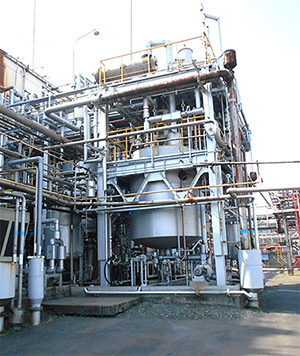
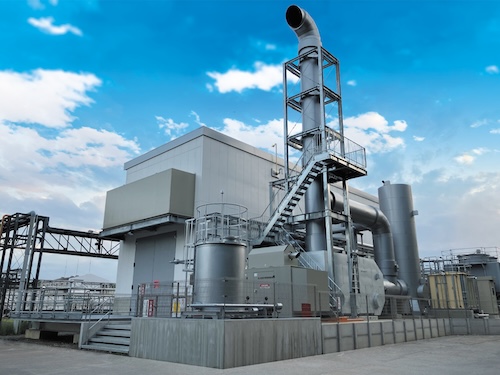
Our Fukuyama Plant, which serves as our manufacturing base for consumer inkjet printer dyes, introduced MFCA in the latter half of 2018. Based on MFCA results, and having verified the benefits in lab studies and on actual machines, the plant confirmed the benefits of recovering solvents from waste solvents via distillation, and switched to a flow whereby recovered solvent could be reused in future production. The result saw reductions in both externally incinerated waste and amounts of solvent purchased, not only lowering the environmental burden but yielding significant cost benefits as well.
We have since expanded MFCA to our Tokyo and Asa Plants (2019), our Kashima Plant (2020), and our Joetsu Plant (2021), and completed our roll-out to all manufacturing bases by FY2023. We are now utilizing the MFCA method to press on with further reductions in environmental burdens and manufacturing costs, commencing introductions at select business sites while aiming for a phased roll-out to the group as a whole.

Distillation Recovery Facility

Solar Power Generation

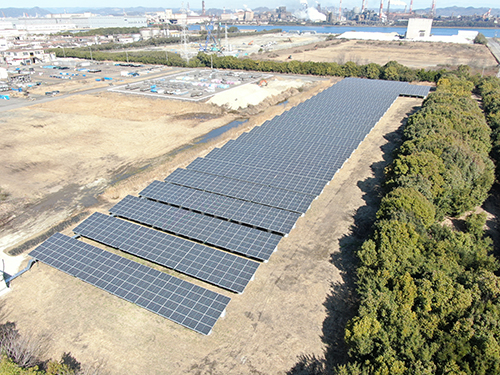
As part of our switchover to low-emission power sources and low-emission-factor renewable energy sources, Nippon Kayaku has introduced solar panels with a view to significantly lowering GHG emissions.
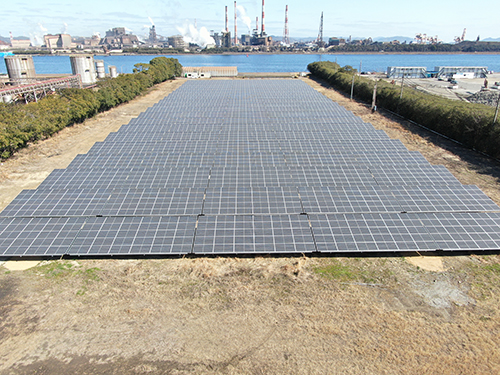
March 2023 saw the advent of a Solar Power Purchasing Agreement (PPA) Model onsite service at our Fukuyama Plant. The PPA model involves Nippon Kayaku loaning land or roof space to third parties for the installation of solar panels, then purchasing the energy produced over the long term. It is hoped this allows us to not only utilize renewable energy sources but save on electricity costs too. The Fukuyama Plant alone seeks to cut GHG emissions by 731t-CO2 through use of the solar energy generated onsite. We are now looking to roll this model out to other manufacturing bases, as well as install solar panels that are in our own possession.

Solar Power Generation

Amounts Contributed to GHG Emission Reductions

Indicators Covering Unit 2022 2023 2024 2025
MFCA Non-Consolidated t-CO2 60.2 40 77.7 136
Solar power Non-Consolidated t-CO2 - 658 683 2,395

Introduction of a Bundled Energy Network Service for Multiple Sites

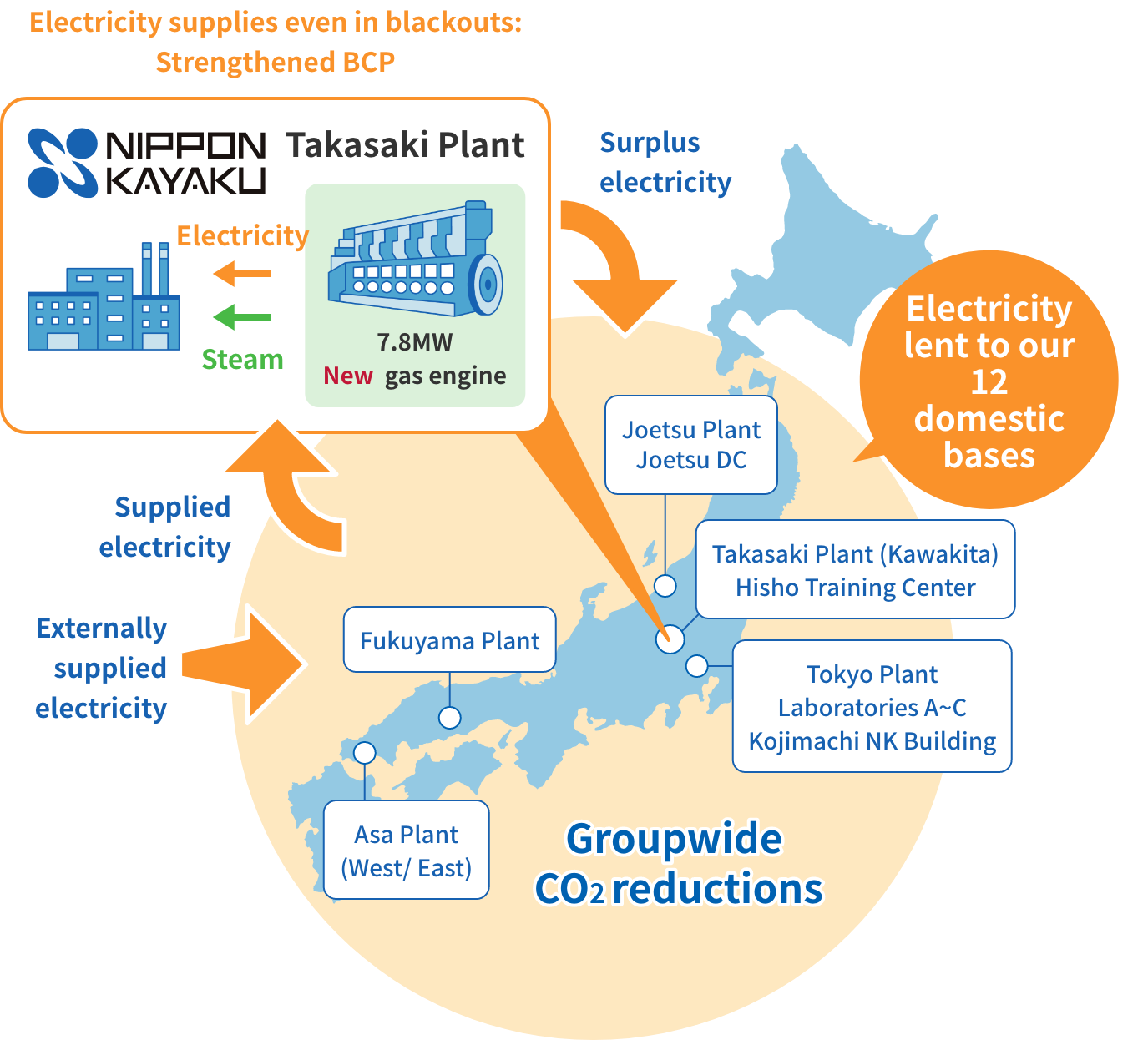
April 2025 saw the Nippon Kayaku Group commence the first Bundled Energy Network System geared towards the fields of medicine and science at 12 of its domestic business sites. A new large-scale gas co-generation system was installed at our Takasaki Plant, not only supplying electricity and heat but also allowing for surplus energy to be lent to 12 business sites across Japan. This system generates enough power for around 17,000 homes*1, and its capacity to lend electricity to other business sites has significantly decreased our Group’s overall CO2 emissions. Furthermore, its Blackout Start (BOS) function*2 allows for the continuation of electricity and heat supplies to the Takasaki Plant even in times of blackout, thereby contributing to increased business resilience. Overall, this initiative is set to deliver a 45% reduction in CO2 emissions (compared with FY2023) across all 12 business sites combined, and 18% drop in energy used by the Takasaki Plant (compared with FY2021). The system, which makes us of gas supplied by the city, ensures that heat produced at the time of power generation can be effectively used, thereby ensuring no energy is wasted. As the Takasaki Plant makes use of significant amounts of heat at the time of production, the presence of an onsite power generation system ensures that no heat produced is wasted, and makes a large contribution towards achieving yet higher energy efficiency levels and the transition to carbon neutrality. Henceforth, the Nippon Kayaku Group will continue to pursue CO2 emission reductions and, through delivering products which contribute to the realization of a decarbonized society, aim for decarbonization across the entire value chain.

Introduction of a Bundled Energy Network Service for Multiple Sites
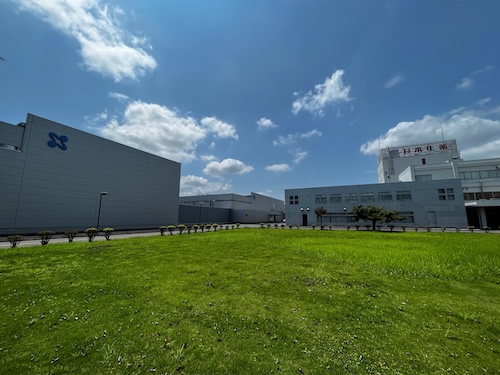
Exterior View of the newly-installed Gas Co-generation System
Takasaki Plant
Takasaki Plant
  • *1Calculated based on Ministry of Environment data from FY2022 which puts the amount of annual electricity consumed by the average household at 3950kWh Ministry of Environment
    data:https://www.env.go.jp/earth/ondanka/kateico2tokei/energy/detail/01/
  • *2When a blackout (of power systems) kicks in, the system staves off a power cut by generating its own power without the aid of any external power-source.
  • *3Covers electricity and gas at the Takasaki Plant and other plants to which power has been lent; emission factors used reflect the adjustments of 2023. Reductions made due to the power system’s low CO2 menu and credits are also included.

Internal Carbon Evaluation

The establishment of our own medium-to-long term internal CO2 evaluation allows us to not only promote CO2 reductions across every business unit, but examine and prepare for the introduction of an internal system which encourages decarbonization investments and measures.

Responding to and Upholding Public Regulations

At all domestic and overseas business sites, Nippon Kayaku can be seen upholding and appropriately responding to laws, regulations and measures pertaining to climate change and reducing energy consumption. In Japan, for example, we follow both the Act on Promotion of Global Warming Countermeasures and the Act on Rationalizing Energy Use (the “Energy-Saving Law”). Listed as a specified business under the latter, Nippon Kayaku is thereby dutybound to pursue a 1% reduction in its energy consumption rate. Through setting annual targets at every business site and rolling out various energy-saving policies, we are currently delivering reduced rates of energy consumption. Under the Energy-Saving Law’s evaluation system, which classes companies in terms of performance, we received an S-class evaluation (signifying targets achieved) for FY2025.

Involvement with Industrial Groups

Nippon Kayaku is a member of The Japan Chemical Industry Association (JCIA), on whose Audit Board our President serves. The JCIA is participating in The Japan Business Federation’s Carbon Neutral Action Plan (formerly the Low-Carbon Society Implementation Plan), which Nippon Kayaku has approved and will itself join from 2030.
So that our company position on climate change policies is consistent with that of the industrial association, we join seminars held by the industry and by government departments such as the Ministry of Economy, Trade and Industry, the Ministry of the Environment, and the Ministry of Health, Labor and Welfare. This allows us to gather information, hold committee posts in each organization which enable us to join climate-change-related discussions, then share any information gleaned internally. We also assess whether our company’s position aligns with the contents of a seminar. In instances where that is not the case, our Responsible Care & Technology Division will discuss, and our Environment, Safety and Quality Management Committee, chaired by our Technology Unit In-charge, will make the relevant adjustments. Through such a process can we align our own climate change strategies with industrial association activities.

CDP Disclosure (Climate Change)

Since 2020, the Nippon Kayaku Group has provided responses to the CDP, an information disclosure program for the climate-change-related risks faced by businesses. Our responses to the 2025 CDP saw our Climate Change Report graded A and our Water Security Report graded A-.

PageTop
Our Business
R&D
Corporate Information
Global Network
Investor Relations
Integrated report
Sustainability